Pregnancy can impact how you feel about your job and how well it fits your new situation. Some kinds of jobs may no longer be possible to do, while others will work well with your changing energy levels and changing physical needs. The following guide outlines job options that will benefit you during your pregnancy, as well as your rights as a pregnant employee.
What to Consider When Choosing Work During Pregnancy
Safety first! When you’re pregnant, you should not work in jobs that include things such as heavy lifting, working with toxic chemicals, and standing for a long period of time. According to the CDC, pregnant workers should not lift more than 25 pounds on a recurring basis. If your job exposes you to chemicals, you need to talk with your doctor to get an evaluation of the risks associated with your job.
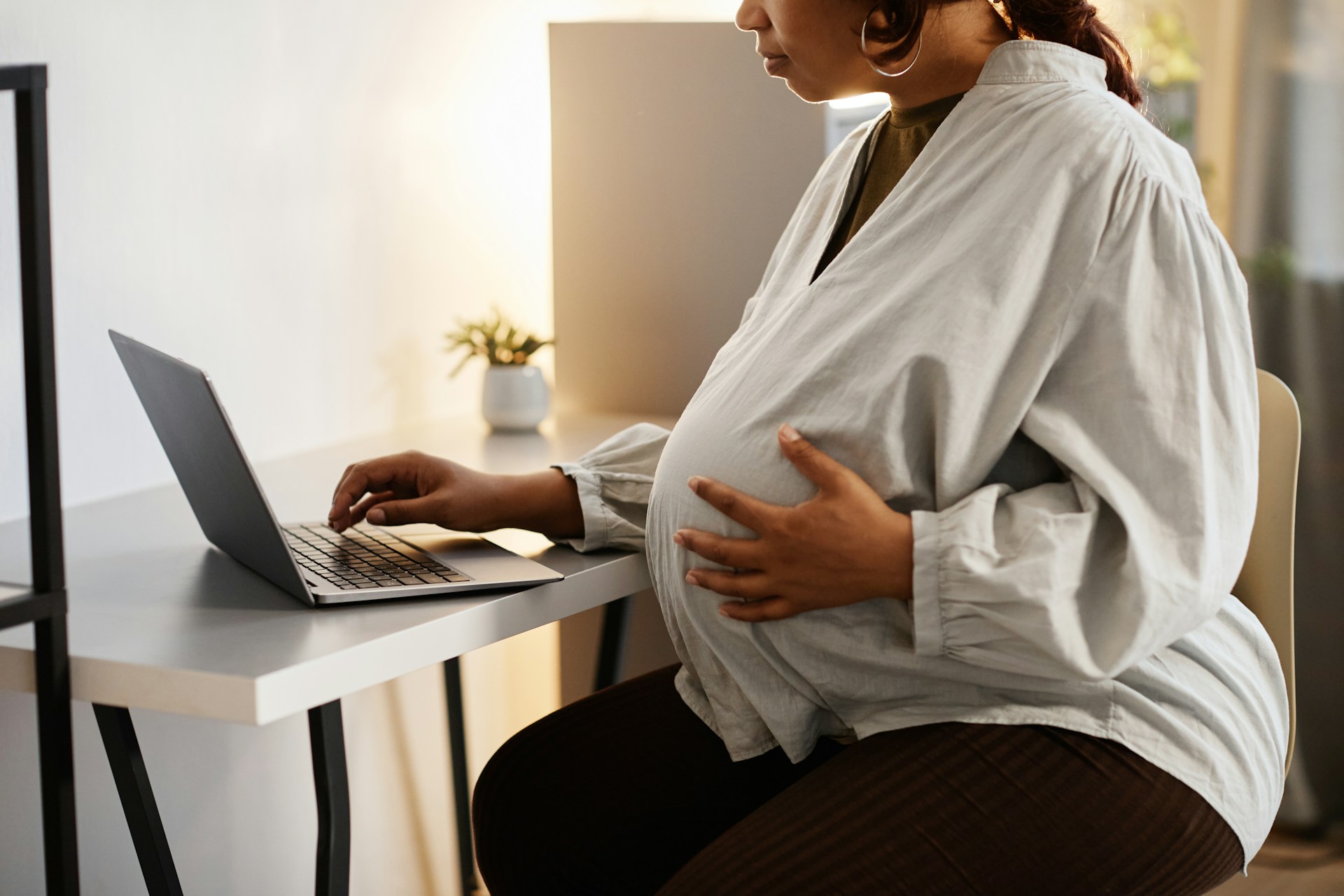
Safety and flexibility are equally important for pregnant women, as they experience fatigue, nausea, and increased appointments with their doctors. Pregnant women who have flexible hours will find it easier to handle these challenges than those with set hours. In addition, the ability to work from home provides relief from commuting, especially during the third trimester of pregnancy when it can be difficult to sit in a vehicle for long periods.
Pregnancy causes a fluctuation in energy levels. In the first trimester, many women experience fatigue. The second trimester is usually when there is an increased level of energy. By the third trimester, your body begins to slow down again. Work that allows for these changes will be compatible with your changing energy levels.
Jobs to Approach With Caution
Workplace hazards can present challenges to pregnant women. According to the CDC, pregnant women should take special precautions when working in an environment where they may be exposed to harmful radiation or hazardous chemicals (such as pesticides).
Health care workers, laboratory technicians, and veterinary personnel should discuss specific risks with their doctor if they experience job-related issues that could harm their unborn child.
In addition to emotional needs, physical needs are also very important. Warehouse jobs, construction jobs, and nursing can require some lifting, which could be increasingly difficult through the third trimester. Because of the amount of time women will have to stand in one place, many women experience increased swelling and discomfort after standing for long periods of time. When a woman is pregnant, and her centre of gravity changes, she can also be at increased risk of falling when trying to balance at work.
Remote Jobs That Work Well During Pregnancy
By working from home, you do away with a great number of pregnancy-related challenges. You have full control over your physical surroundings, access to restrooms is easy, and you are able to take any necessary breaks throughout the workday. According to the US Bureau of Labor Statistics, remote working options have increased greatly since 2020 and are still present in many areas today.
Remote customer service has become increasingly popular in recent years, with a growing number of companies hiring remote customer service representatives. Some of the largest employers of remote customer service agents include Amazon, Apple, and many insurance companies, with hourly wages typically ranging from $15-$25 and set schedules. Most training for remote customer service jobs lasts 1-3 weeks.
Here are remote jobs suitable during pregnancy:
- Customer service representative
- Virtual assistant
- Data entry clerk
- Online tutor
- Freelance writer or editor
- Social media manager
- Bookkeeper
- Transcriptionist
- Medical coder
- Graphic designer
All of these positions require the use of a computer along with internet access. Physical requirements for these positions are usually limited. Some positions allow for varying hours of work within a flexible schedule. There are also many opportunities for part-time work as well.
Freelance and Contract Work
Working for yourself means that you have complete control of your schedule. Freelance writers, designers, and consultants can create their own schedule to work around. Example: Morning sickness? Work in the afternoon instead. Have appointments or meetings? Adjust the deadlines for your work to make it easier to get done.
Freelancers are able to find work through various online services such as Upwork and Fiverr. If you are looking at starting a freelance career, it typically takes time to build that business; therefore, if you are pregnant, this could provide an opportunity for you to start your freelance career now with smaller projects by providing additional income and building your portfolio for when you have your baby.
Freelancers do not have a stable source of income and are typically not given any paid leave or health insurance by their employer. However, the advantages that come with being flexible should be weighed against the disadvantages.
In-Person Jobs With Pregnancy-Friendly Features
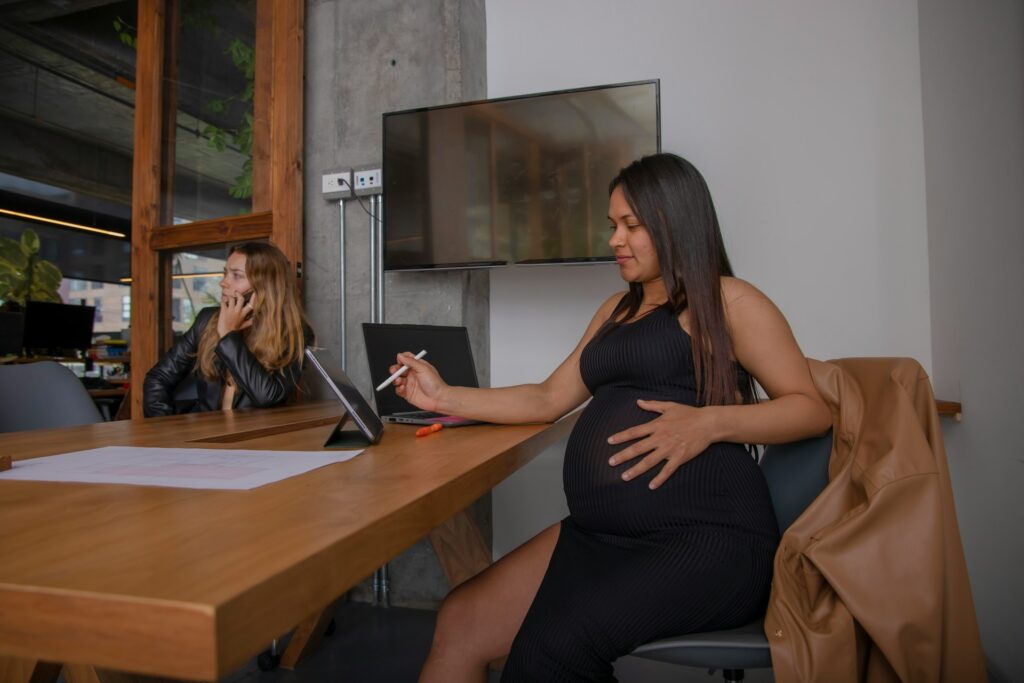
Not every individual desires or has the option of working remotely. Many of the jobs that do not require working remotely provide a lot of flexibility to help pregnant individuals maintain their employment when they are unable to work from home. The majority of office administrative positions provide opportunities for an employee to do a large portion of their job while sitting down (i.e., computer work, desk work) and have regular hours. A receptionist also most likely spends the majority of their workday sitting at their desk.
There are many different types of retail jobs. For example, cashiers spend most of the day on their feet, while the customer service desk offers a chance to sit down during their shift (some stores modify duties for pregnant employees), etc.
Positions in education can also be accommodated during pregnancy. This includes teacher assistants, librarians, and school office staff who generally have a set and predictable schedule. Summer breaks also coincide with many due dates for women who became pregnant during the fall.
Here are in-person options to consider:
- Office administrator
- Bank teller
- Teacher or teacher aide
- School counselor
- Optician
- Medical receptionist
- Real estate agent
- Insurance agent
When interviewing for any position, be sure to inquire about the company’s accommodation policies regarding pregnancy. Many employers will make every effort possible to modify tasks to assist a pregnant employee.
Your Legal Rights as a Pregnant Worker
The Pregnancy Discrimination Act (amended by Title VII of the Civil Rights Act) prohibits employers from terminating an employee based on her pregnancy status. In addition, under the Americans with Disabilities Act (ADA), employers are required to provide reasonable accommodations for employees with pregnancy-related conditions.
The Pregnant Workers’ Fairness Act, which becomes effective June 2023, bolsters these protections by requiring businesses with 15 or more employees to provide reasonable accommodations for pregnant workers. These accommodations may include more frequent breaks or light-duty assignments, as well as flexible working hours.
States might provide even more added protection for your rights. For instance, several states, including California and New York, have laws to protect pregnancy from discrimination on a level above what federal law allows. Refer to your state’s website for additional information regarding your pregnancy rights within its jurisdiction.
Requesting Workplace Accommodations
You do not have to disclose your entire medical history when requesting an accommodation to perform your job. You will need to articulate what you require (accommodation) and how it helps you perform the essential functions of your job. Accommodation will vary depending on each employee’s unique needs; common accommodation requests include:
- More frequent bathroom breaks
- A stool for standing jobs
- Modified lifting requirements
- Schedule adjustments for appointments
- Temporary transfer to less physical duties
Always have all requests in writing and save all communication. Most employers will cooperate once they know their legal obligations are. Contact the Equal Employment Opportunity Commission for assistance if issues occur.

Planning for Maternity Leave
It is crucial to know your leave options for a job. According to the Family and Medical Leave Act, 12 weeks of unpaid, protected leave from your job is available for qualifying employees. However, you must have been employed with your current employer for at least 12 months and work for a company with at least 50 other employees.
Paid family leave is available in some states. Examples include California, New Jersey, and New York, where you can receive some pay while on maternity leave. Before you think you aren’t eligible, look into your state’s program.
Policies vary greatly among employers. Many organizations have extensive paid leave benefits while others provide minimal benefits (at or near the minimum required by law). Pregnant women should ask potential employers about their maternity leave policy before accepting any position so that there are no misunderstandings later about how to utilize maternity leave if necessary.
Sources
- Centers for Disease Control and Prevention: Reproductive health and the workplace (www.cdc.gov)
- U.S. Bureau of Labor Statistics: Remote work trends and employment data (www.bls.gov)
- Equal Employment Opportunity Commission: Pregnancy discrimination guidance (www.eeoc.gov)
- U.S. Department of Labor: Family and Medical Leave Act information (www.dol.gov)
- Pregnant Workers Fairness Act: Federal law effective June 2023